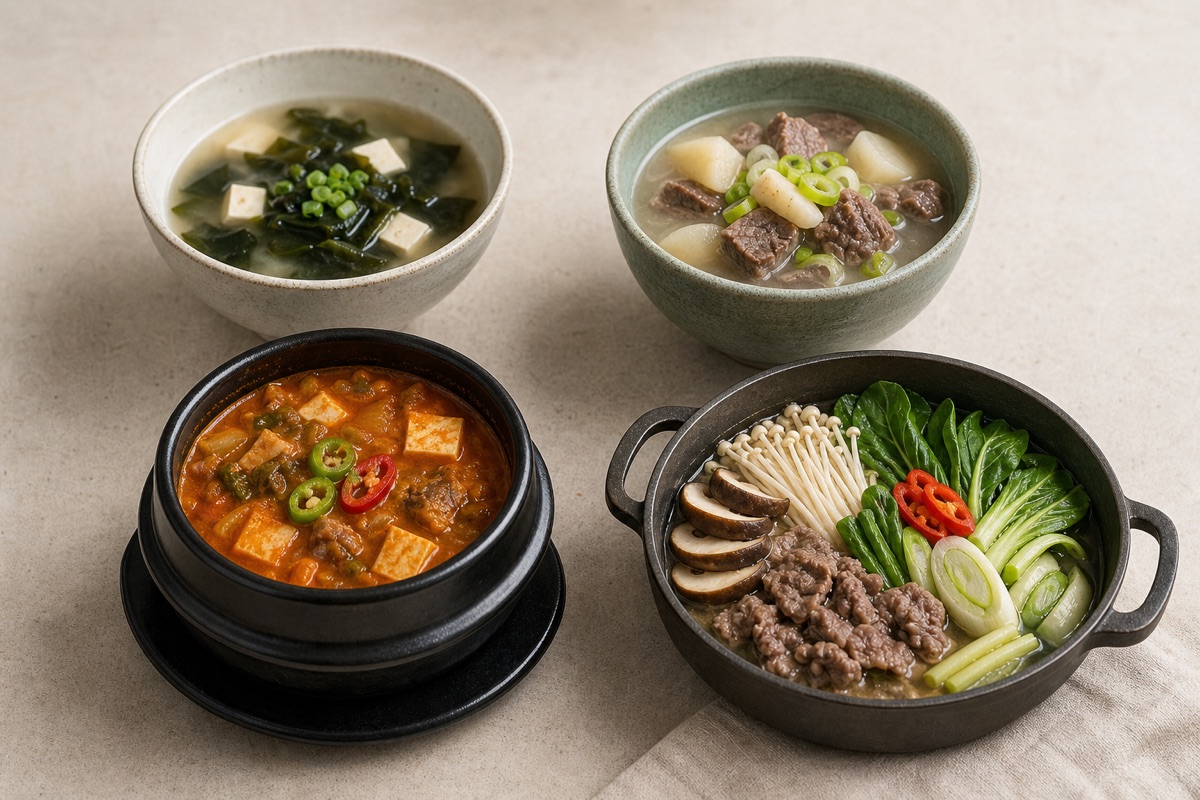
Know the dish
Guk and tang generally name soup-like dishes, jjigae is commonly a more concentrated stew, and jeongol is assembled and simmered at the table, but boundaries overlap.
- Keep the Korean name “국·탕·찌개·전골 이름 해설” visible when searching menus or showing staff.
- Check the portion before adding sides; servings and set-menu rules vary by venue.
Order with context
Use the full dish name to learn the main ingredient and ask whether rice is inside, included separately, or ordered on its own.
- If heat is the concern, use the separate less-spicy guide instead of assuming the dish can be changed.
- Recipes, garnishes, serving size, and spice level can vary by kitchen.
Plan the next stop
The suffix helps predict format, not exact salt, spice, stock, portion, or sharing rules; menus use the terms with regional and house variation.
- Check nearby restrooms in K-Restroom before sitting down or joining a queue.
- Save one related guide now so the next decision takes fewer taps.