Plan around your own pattern
Crohn’s disease and other inflammatory bowel diseases are not the same as IBS; diet does not replace medical care, and individual needs can change with disease activity and treatment.
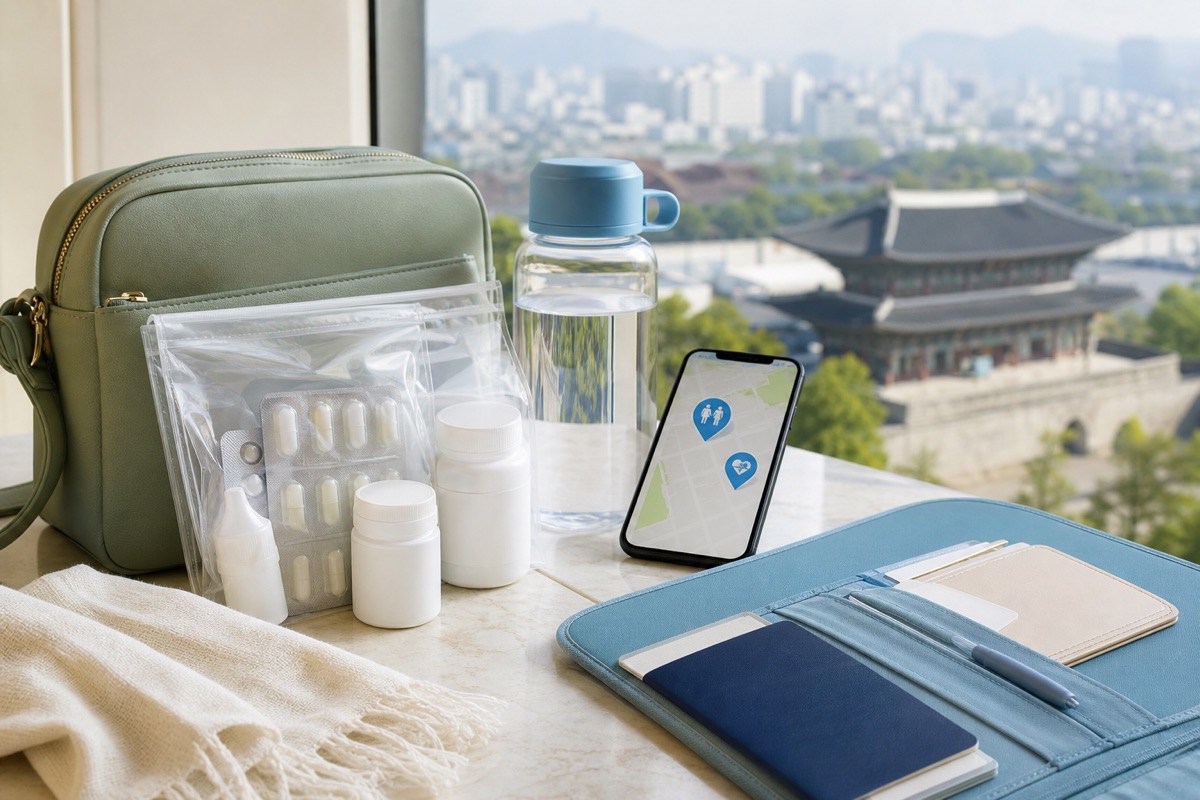
- Keep medicines in their original packaging and carry the travel documentation your clinical team recommends.
- Save toilets and a care option near long transfers before the day begins.
Ask before you order
Travel with the medication, documents, and food strategy arranged with your clinical team. Ask about exact ingredients and portions without labelling a Korean dish universally safe or unsafe.
- Ask about one ingredient, stock, sauce, and portion at a time.
- Use your established plan for disease activity and treatment; a food list cannot replace it.
Know when to seek help
Plan toilets around transfers and queues and know where to seek care. A significant change from your usual pattern deserves medical attention rather than a new self-directed restriction.
- Call 119 for an emergency in Korea; use 1330 for general traveller assistance.
- Contact a clinician for a substantial change from your usual symptoms or difficulty keeping up with treatment.