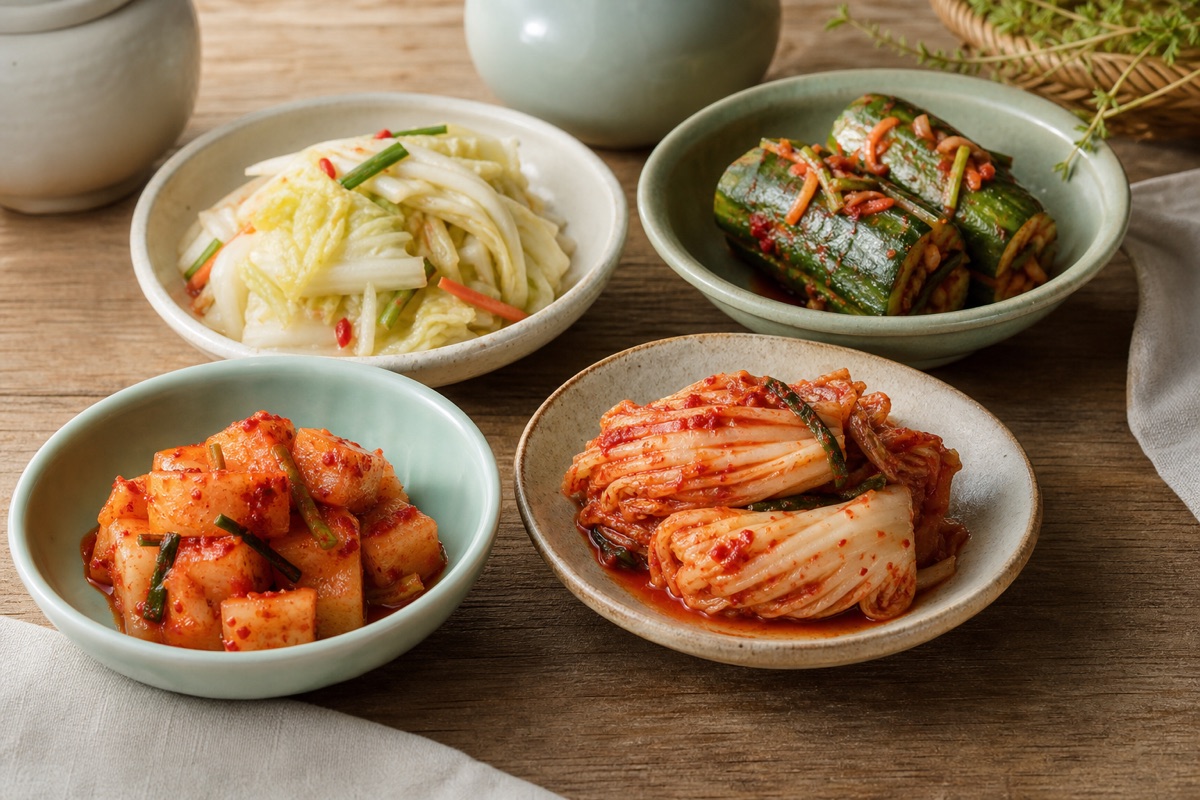
Know the dish
Baechu kimchi uses napa cabbage, kkakdugi uses cubed radish, and oi sobagi uses cucumber; seasoning and fermentation create very different textures and flavors.
- Keep the Korean name “김치는 하나의 반찬이 아니라 큰 가족” visible when searching menus or showing staff.
- Check the portion before adding sides; servings and set-menu rules vary by venue.
Order with context
Ask which kimchi comes with the meal and whether it contains seafood seasoning if that ingredient matters to you.
- If heat is the concern, use the separate less-spicy guide instead of assuming the dish can be changed.
- Recipes, garnishes, serving size, and spice level can vary by kitchen.
Plan the next stop
Fresh and longer-fermented kimchi can taste noticeably different, and the same named style changes by household, season, and kitchen.
- Check nearby restrooms in K-Restroom before sitting down or joining a queue.
- Save one related guide now so the next decision takes fewer taps.